
Store Items
Maintain the item information used by the stores and wider operation.
Manage purchase and store requisitions, goods received, suppliers, inventory, store issues, stocktakes, bills of material, cost information, budgets and operational transactions.
The module covers more than spare-parts stock. It provides practical controls around purchasing, receiving, store transactions, inventory and related operational records.
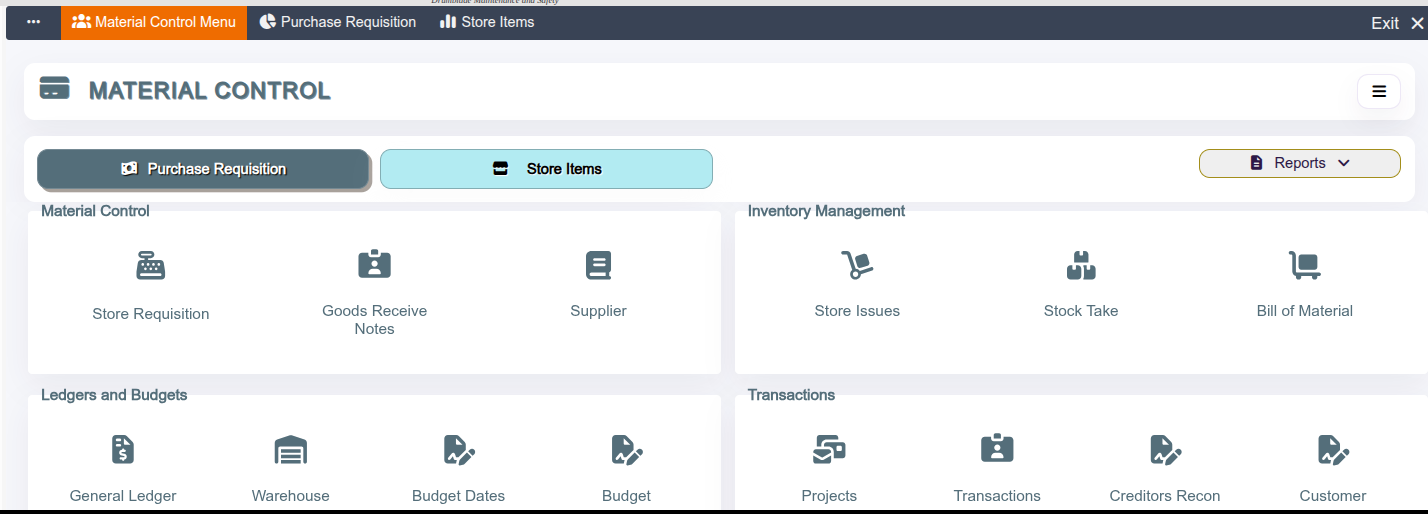
Purchase and store requisitions provide a structured starting point for material demand, while receiving records preserve what entered the operation.
Inventory controls provide the operational detail required to know what is held, where it is held and how it moves through the business.
Maintain the item information used by the stores and wider operation.
Record material leaving the store and the operational context for the issue.
Support physical stock verification and the review of inventory differences.
Define material structures used by equipment, products or operational work.
Organise inventory according to the implemented stores and location structure.
Review stock, movements and the information required for operational decisions.
The implemented module provides areas for general-ledger references, warehouses, budget dates, budgets, projects, transactions, creditor reconciliation and customer records.
Retain the operational ledger references used by the implemented material workflow.
Organise stores and inventory according to the deployed location structure.
Control the periods used by the module's budget process.
Capture and review the applicable operational budget information.
Retain project and transaction context where configured.
Support the implemented creditor and customer transaction workflows.
These controls are presented as part of the implemented dMS operational module. dMS should not be positioned as a replacement for a full accounting or ERP platform unless that scope is specifically confirmed.
When Material Control is implemented with dMS Maintenance and Reliability, stores and maintenance teams can retain the operational relationship between material demand, issue, work execution and equipment history.
Review the requisition, receiving, inventory, budget and transaction controls your operation needs.